
Cities
Tennis ladders in Atlanta
The Atlanta singles ladder on Deuce is open, and it is free to join. The City of Atlanta lists 108 public courts across 45 parks. Park courts are free on a first-come basis, or reservable through iParcs for $3 to $5.50 an hour. The city's five racquet centers, run by Agape Tennis Academy, charge $3 per person per hour before 6pm and $5 after, and take bookings three days ahead.
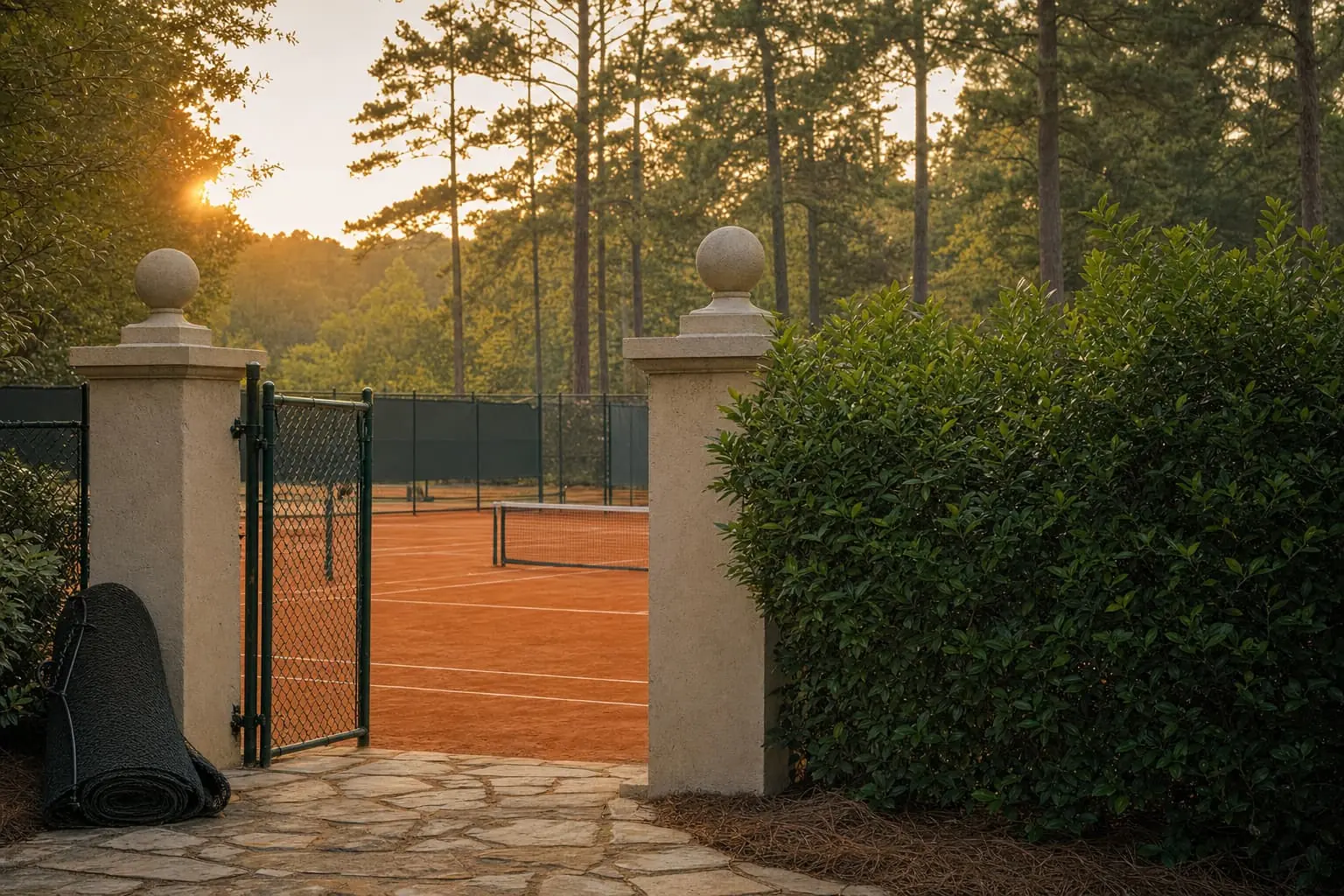
Atlanta at a glance
| Ladders on Deuce | 1 |
| Active players (last 30 days) | 0 |
| Matches played (last 30 days) | 0 |
Ten players is enough to start a ladder. Below that we would rather tell you so than launch something that dies in three weeks.
Where you would play
Atlanta's courts sit in three places: city park courts, the city's racquet centers, and a large number of neighborhood swim-and-tennis clubs.
City park courts
The City of Atlanta Department of Parks and Recreation lists 108 public tennis courts across 45 parks. They are free on a first-come, first-served basis. If others are waiting, the city asks you to keep your play to one hour.
You can also reserve a park court through iParcs, the city's reservation system, which needs an account. A reservation costs $3 to $3.50 an hour at non-prime times and $5 to $5.50 at prime time, the lower figure for residents. Prime time means after 6pm on weekdays and all day on weekends and national holidays. Reservations must be made at least three days ahead and can be made up to 90 days ahead.
City racquet centers
The city has five public racquet centers, managed and operated by Agape Tennis Academy. Court time is charged per person: $3 an hour before 6pm and $5 an hour from 6pm and all day on weekends. Players aged 65 to 74 pay half, and players 75 and over play free. Clay at Bitsy Grant costs $5 before 6pm and $6 after.
Courts are reserved online or by email up to 72 hours ahead, in 30, 60 or 90 minute blocks, and no membership is required. Since May 2025 the whole booking is charged to the player who made it, so settle the split with your opponent before you book.
Atlanta public courts
| Site | Area | Tennis courts | Lights | Booking |
|---|---|---|---|---|
| Bitsy Grant Tennis Center | 2125 Northside Dr NW | 25 (13 clay, 12 hard), plus 3 platform courts | Not confirmed | Agape, up to 72 hours ahead |
| Sharon Lester Tennis Center at Piedmont Park | Piedmont Park, NE | 12 hard | Yes | Agape, up to 72 hours ahead |
| Chastain Park Tennis Center | 290 Chastain Park Ave NW | 9 | Not confirmed | Agape, up to 72 hours ahead |
| Joseph McGhee Tennis Center | 820 Beecher Ct SW | 9 | Not confirmed | Agape, up to 72 hours ahead |
| Washington Park Tennis Center | 1125 Lena St NW | 8 | Not confirmed | Agape, up to 72 hours ahead |
| Southside Park | Jonesboro Road, SE | 6 | Not confirmed | Free, or iParcs |
| Perkerson Park | 770 Deckner Ave SW | 6 | Not confirmed | Free, or iParcs |
| Bedford Pine Park | 400 Merritts Ave NE | 4 | Not confirmed | Free, or iParcs |
| Candler Park | 1500 McLendon Ave NE | 4 | Not confirmed | Free, or iParcs |
| Grant Park | 840 Cherokee Ave SE | 4 | Not confirmed | Free, or iParcs |
| Coan Park | 1350 Woodbine Ave SE | 4 | Not confirmed | Free, or iParcs |
| Frankie Allen Park | 100 Bagley St NW | 4 | Not confirmed | Free, or iParcs |
| Adams Park | 2300 Wilson Dr SW | 4 | Not confirmed | Free, or iParcs |
| Arthur Langford Jr. Park | 211 Thornton St SE | 4 | Not confirmed | Free, or iParcs |
Neighborhood and swim-tennis clubs
This is Atlanta's distinctive feature. A large share of the metro's courts sit inside neighborhood swim-and-tennis facilities, which are also the organizing unit for the region's league tennis. For a ladder, a neighborhood club is the natural container: the roster, the courts and the social structure already exist in one place.
Commercial and indoor
Commercial tennis centers exist. Indoor courts are relatively scarce, because the climate rarely requires them.
When you can play
Atlanta plays close to year-round outdoors.
March to May and September to November
are the best stretches, and they are also when the region's league seasons run.
June to August
is hot and humid with afternoon thunderstorms. Play early or under lights.
December to February
is mild by American standards. Cold snaps interrupt rather than end play, and lit courts stay usable.
Plan around the racquet center clock. All five centers are open 9am to 9pm on weekdays and 9am to 6pm on Saturday and Sunday.
Recommended season length: ten weeks, starting in March or September. Note that those are the busiest league months in Atlanta, and a ladder here competes for the same evenings.
How a ladder works here
The shared mechanics are the same in every city. What changes here is the format, and it changes because of the court slot.
Park courts are free and unbooked, with a one-hour courtesy limit when others are waiting. Racquet center courts are booked in 30, 60 or 90 minute blocks.
- Ninety minutes booked, or a quiet park court. Best of three sets with a match tiebreak to ten in the third.
- One hour booked, or people waiting. An eight-game pro set, or short sets to four.
The mechanics
These are the defaults. An organizer can change most of them when the ladder is set up.
| Rule | Default |
|---|---|
| Challenge range | Five rungs up. Rung 6 may challenge rung 1 |
| Response window | 5 days |
| Play window | 30 days from acceptance |
| First challenge | One unrestricted challenge inside your own level band. Always on |
| Rematch cooldown | 14 days. Playing someone else does not shorten it |
| Absence | Up to 21 days. You keep your rung and cannot be challenged |
| Inactivity | Points decay every 30 days without a played match. Your rung is released at 180 days and you are withdrawn at 365 |
A thirty-day play window suits Atlanta. The scheduling competition here is not courts, it is the players' existing league commitments. Expect a ladder in Atlanta to be a second format for people who already play, not their only one.
Full ruleset at /rules. Scoring and verification at /scoring.
Levels and where you start
The United States runs on NTRP, and Atlanta is the most NTRP-literate city in the country. Almost every adult competitive player here knows their rating and their league level. UTR appears among stronger players and juniors.
That literacy cuts both ways. Seeding is easy, and the local culture around rating accuracy is sharp enough that placement disputes will be raised quickly. Publish the placement rule and stick to it.
Deuce accepts whatever you have: NTRP, UTR, WTN, LTA rating, ITN, a national federation ranking, or a club level. All of them are optional. If you have none, describe your game and the system places you.
Two rules to know before you sign up:
- Low confidence places you high, not low. When we are unsure, you start at the top of the plausible range, never the middle and never the bottom. An underplaced player gets easy matches, which is the fastest way to ruin a ladder for everyone else.
- Your first challenge fixes it. One unrestricted challenge anywhere inside your band, played once, corrects a bad placement in a single match.
How the rating systems compare across countries is at the conversion table. What each NTRP level looks like in a match is on the NTRP rating chart.
How competitive tennis is organized in Atlanta
Atlanta is the hardest competitive environment on this list, and it should be approached with that understood.
ALTA is the largest league
The Atlanta Lawn Tennis Association has run league tennis for 90 years and reports more than 60,000 members. Its adult leagues play year-round in seven-week seasons, with separate men's, women's, mixed and senior leagues, and playoffs that end at the City Championship.
USTA Atlanta runs the USTA leagues
A non-profit community tennis association founded in 1980, it serves metro Atlanta and says it oversees the largest USTA League program in the country. Its adult leagues are split by age (18, 40, 55 and 65 and over), with mixed and tri-level formats alongside.
Ladders already exist
in this market, run by established organizations and by neighborhood clubs, some of them on dedicated ladder software.
Coaching and junior development
are correspondingly deep.
What is missing
is not a format, it is a modern product. The formats here are mature. The question in Atlanta is whether a better challenge-to-played-match conversion rate is worth switching for. That is a harder sell than an empty market, and it is why this city is on the list for its size rather than its ease.
Questions
Is there a tennis ladder in Atlanta?
Yes. Deuce runs the Atlanta singles ladder, which is open-ended and free to join. Some neighborhood clubs and established organizations also run ladders of their own. Most organized tennis in Atlanta is team league play through ALTA and USTA Atlanta, where you are placed on a team rather than choosing opponents.
What does a public tennis court cost in Atlanta?
City park courts are free on a first-come basis. Reserving one through iParcs costs $3 to $3.50 an hour at non-prime times and $5 to $5.50 at prime time. At the city's racquet centers you pay $3 per person per hour before 6pm and $5 after, with clay at Bitsy Grant a little more.
How do I book a court in Atlanta?
For a park court, use iParcs, the City of Atlanta reservation system. You need an account, and bookings open between three and 90 days ahead. For a racquet center, book with Agape Tennis Academy online or by email, up to 72 hours ahead, in 30, 60 or 90 minute blocks.
Where are the public tennis centers in Atlanta?
The city has five: Bitsy Grant on Northside Drive, with 25 courts including 13 clay; Sharon Lester in Piedmont Park, with 12; Chastain Park and Joseph McGhee, with nine each; and Washington Park, with eight. Agape Tennis Academy runs all five for the Department of Parks and Recreation.
When is the tennis season in Atlanta?
Close to year-round. March to May and September to November are the best stretches, summer is hot with afternoon storms, and winter is mild. League tennis never stops: ALTA runs seven-week seasons all year, so a ladder here shares evenings and courts with players' team commitments.
Can I play a ladder and league tennis at the same time?
Most people here will. A ladder is a second format for players who already have a team, which means it competes for the same evenings. A thirty-day play window leaves room to fit a challenge match around league fixtures without forcing anyone to give up a team night.
What rating is used?
NTRP, the rating USTA league tennis runs on, and Atlanta players generally know theirs precisely. UTR appears among stronger players and juniors. Deuce accepts either, plus WTN and club levels, and your first unrestricted challenge corrects a placement that started too high or too low.
How is a ladder different from league tennis?
League tennis gives you a team, a captain, a level and a fixture list. A ladder gives you a rung and lets you choose who to challenge. You play the people near you in the standings, and each confirmed result earns Deuce Points that move you up or down.
What does it cost to join?
Nothing. Deuce Ladder is free for players right now. Court fees are separate.
How do I start one?
Below. You need ten players you can name.
Start a ladder in Atlanta
For a club pro, a volunteer captain, a company team, or one person whose group chat has outgrown itself.
The application is ten questions and takes about five minutes. We review it and get in touch only if something needs clarifying. Once it is approved, the ladder is live and players can join and challenge straight away.
There is no self-serve wizard: every application is reviewed before the ladder opens.
You need ten players you can name. Twelve or more is where a ladder becomes self-sustaining, because that is the point at which the same two people stop playing each other every week. Under ten, apply anyway: we will tell you so rather than launch something thin.
If you already run a ladder in a spreadsheet, there is no import: invite your players once the ladder is approved, and the unrestricted first challenge sorts the order in a round.
Sources and last verified
- City of Atlanta Tennis, City of Atlanta Department of Parks and Recreation
- City of Atlanta Tennis Prices, City of Atlanta Department of Parks and Recreation
- Directory of Racquet Centers and Courts, City of Atlanta Department of Parks and Recreation
- List of Tennis Courts, City of Atlanta Department of Parks and Recreation
- City of Atlanta Tennis Fee Structure, City of Atlanta Department of Parks and Recreation
- Bitsy Grant Tennis Center and the other center pages, Agape Tennis Academy
- ALTA, Atlanta Lawn Tennis Association
- About USTA Atlanta, USTA Atlanta
Last verified: September 2026.