
Cities
Tennis ladders in Tokyo
The Tokyo singles ladder is open on Deuce, and anyone can join. Here is where you would play, how the public court lottery works, and how the ladder works.
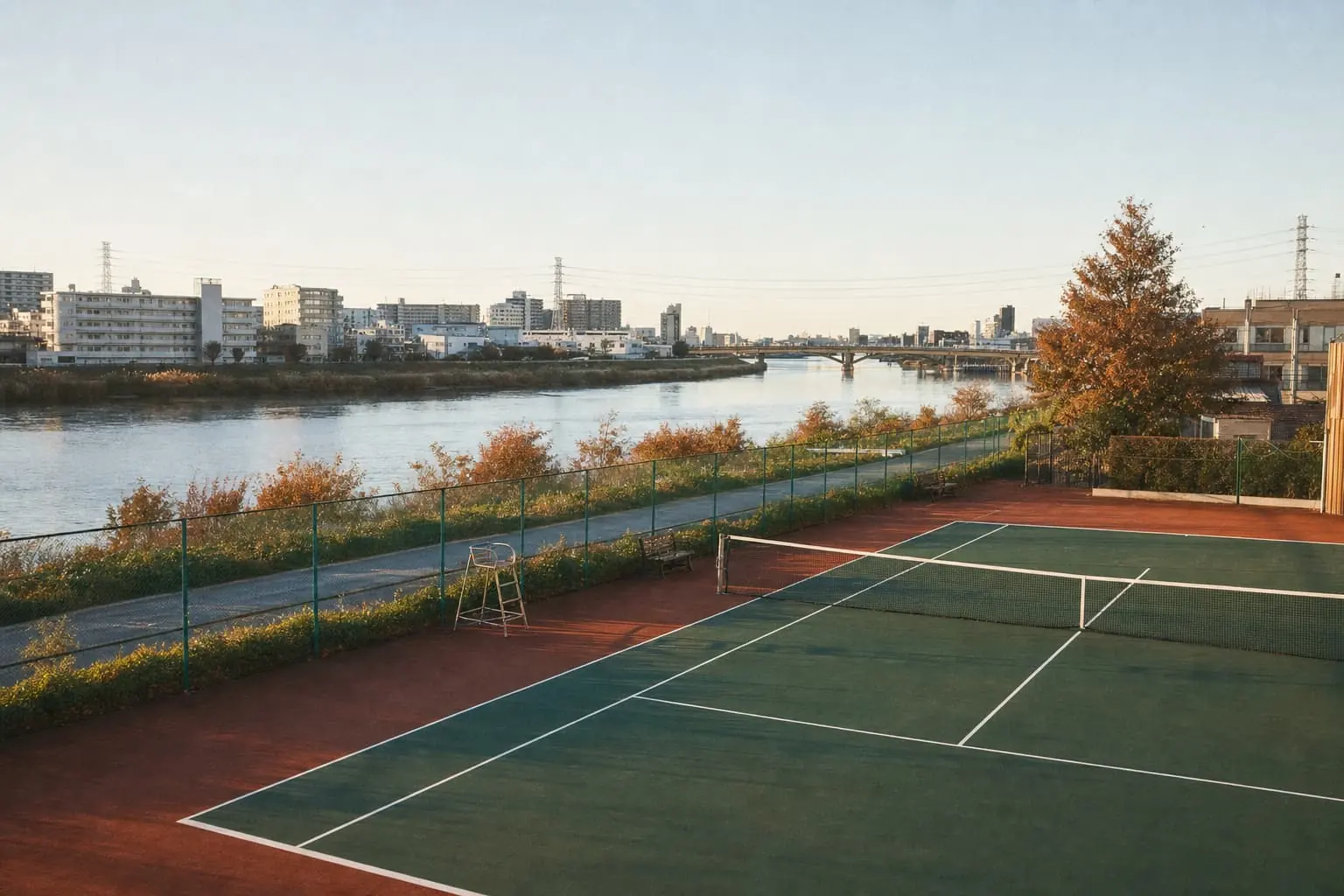
Tokyo at a glance
| Ladders on Deuce | 1 |
| Active players (last 30 days) | 0 |
| Matches played (last 30 days) | 0 |
Ten players is enough to start a ladder. Below that we would rather tell you so than launch something that dies in three weeks.
Where you would play
Tokyo has a large, cheap public court network and a booking system that defeats most newcomers. Understand the lottery before you plan anything else.
The lottery
Public courts are not booked, they are won. The sequence runs lottery, then confirmation, then first-come vacancy, and it repeats monthly.
Three things follow from that, and all three shape a ladder here.
- You must register first, in person. Ward registration generally requires attending a ward or park administration office with proof of residency. Metropolitan park courts use the Tokyo Sports Facility Reservation System.
- Winning is not booking. If you win a slot and miss the confirmation deadline, you lose it.
- The odds are bad, and worse at weekends. A commonly cited rule of thumb is roughly one in four on a weekday and one in ten at weekends.
A one-in-ten weekend chance is the single most important number on this page. It means a Tokyo ladder cannot run on a short play window, and it means the player who already holds a court should be the one proposing the match.
What public courts cost
Public courts are priced by time block, and evening play carries a separate lighting fee. Each ward and the metropolitan parks set their own rates, so check the fee table of the park or ward that runs the court.
Some wards also cap how many slots you can hold per month, counting lottery wins and vacancy bookings together. Check your ward's cap before an organizer assumes one player can carry the booking load for a whole ladder.
Court time is sold in blocks, commonly two hours, sometimes one. That is generous by the standards of most cities on this list, and it means the format is not the constraint here. Access is.
Private and commercial courts
Commercial centres, hotel courts and indoor facilities rent by the hour at several times the public rate, and they can be booked normally, by phone or online, without a lottery and often without residency. For a ladder that needs certainty on a date, they are worth the premium.
Some historic clubs enforce a strict all-white dress code and require non-members to apply and pay in person at least a day ahead. Worth checking before you send a player there.
When you can play
Tokyo has four real seasons and two of them are difficult.
April to May and October to November
are the best tennis months. Mild, dry, comfortable.
June to mid-July
is the rainy season. Expect cancellations.
Late July to September
is hot and very humid, with typhoons possible from late summer into October.
December to February
is cold and dry. Outdoor play continues, and courts are easier to get.
Recommended season length: eight weeks, starting in April or October
How a ladder works here
The shared mechanics are the same in every city. What changes here is the format, and it changes because of the court slot.
Public courts are typically allocated in fixed blocks rather than open-ended hours, and the block length varies by facility.
- A two-hour block. Best of three sets with a match tiebreak to ten in the third. This is the common public block length and it fits a full match comfortably.
- A one-hour block. An eight-game pro set, or short sets to four.
Tokyo is the one city on this list where the format is not the problem. Getting the court is.
The mechanics
These are the defaults. An organizer can change most of them when the ladder is set up.
| Rule | Default |
|---|---|
| Challenge range | Five rungs up. Rung 6 may challenge rung 1 |
| Response window | 5 days |
| Play window | 30 days from acceptance |
| First challenge | One unrestricted challenge inside your own level band. Always on |
| Rematch cooldown | 14 days. Playing someone else does not shorten it |
| Absence | Up to 21 days. You keep your rung and cannot be challenged |
| Inactivity | Points decay every 30 days without a played match. Your rung is released at 180 days and you are withdrawn at 365 |
Keep the full play window, and consider inverting who books. A short window does not survive a monthly lottery with one-in-ten weekend odds. The default of 30 days spans one lottery cycle, so an organizer here should not shorten it, and should align the ladder's rhythm to the lottery cycle rather than to a fixed clock.
The stronger adaptation is to let the person who already holds a court propose the match. In most cities the challenger books. In Tokyo, court possession is scarcer than willingness to play, so the court should lead.
Full ruleset at /rules. Scoring and verification at /scoring.
Levels and where you start
Japan has its own domestic ranking structures for registered competitive players, and almost none of the international ratings are in common use among social players. Most players in an English-language ladder in Tokyo will arrive with an NTRP or UTR estimate or nothing at all.
Deuce accepts whatever you have: NTRP, UTR, WTN, LTA rating, ITN, a national federation ranking, or a club level. All of them are optional. If you have none, describe your game and the system places you.
Two rules to know before you sign up:
- Low confidence places you high, not low. When we are unsure, you start at the top of the plausible range, never the middle and never the bottom. An underplaced player gets easy matches, which is the fastest way to ruin a ladder for everyone else.
- Your first challenge fixes it. One unrestricted challenge anywhere inside your band, played once, corrects a bad placement in a single match.
How the rating systems compare across countries is at the conversion table. What each NTRP level looks like in a match is on the NTRP rating chart.
How competitive tennis is organized in Tokyo
Tokyo has an enormous amount of tennis and very little of it is open to a newcomer who does not read Japanese.
Circles and clubs
are the dominant structure. Membership-based groups with regular sessions, usually organized around a workplace, a university or a neighborhood.
Commercial schools
run large coaching operations with internal social play.
English-language groups
exist and are how most of the international community finds tennis here. They run on messaging apps and shared spreadsheets.
What is missing
is a standing ranking with an English interface that any player can join without a personal introduction. That is the gap this page exists to serve.
Questions
Is there a tennis ladder in Tokyo?
Circles and clubs run internal competition, mostly in Japanese and mostly by introduction. Deuce runs the Tokyo singles ladder. It is open-ended, and anyone can join.
How do I book a public court in Tokyo?
You do not book, you enter a lottery. Register in person at the ward or park administration office first, then enter the monthly draw, then confirm if you win. Miss the confirmation deadline and you lose the slot. Unclaimed slots are released for first-come vacancy booking.
What are my chances in the lottery?
As a rule of thumb, around one in four on a weekday and one in ten at weekends. Treat those as directional rather than exact.
What does a court cost?
Public courts are priced by time block, with a separate fee for lights in the evening. Each ward and the metropolitan parks set their own rates. Commercial and indoor courts cost several times as much and can be booked normally.
Can I avoid the lottery?
Yes, by paying for it. Commercial centres, hotel courts and indoor facilities take direct bookings without a lottery and usually without residency requirements. For a ladder that needs a court on an agreed date, that certainty is often worth the price.
When is the best time of year to play?
April to May and October to November. June into mid-July is the rainy season and late summer brings heat, humidity and typhoons.
Do I need to speak Japanese?
To use most public booking systems, effectively yes. A ladder run in English removes the harder problem, which is finding opponents at your level.
How is a ladder different from a circle?
A circle is a group you join and attend. A ladder is a standing ranking where you choose who to play and the result moves your position.
What does it cost to join?
Nothing. Deuce Ladder is free for players right now. Court fees are separate.
How do I start one?
Below. You need ten players you can name.
Start a ladder in Tokyo
For a club pro, a volunteer captain, a company team, or one person whose group chat has outgrown itself.
The application is ten questions and takes about five minutes. We review it and get in touch only if something needs clarifying. Once it is approved, the ladder is live and players can join and challenge straight away.
There is no self-serve wizard: every application is reviewed before the ladder opens.
You need ten players you can name. Twelve or more is where a ladder becomes self-sustaining, because that is the point at which the same two people stop playing each other every week. Under ten, apply anyway: we will tell you so rather than launch something thin.
If you already run a ladder in a spreadsheet, there is no import: invite your players once the ladder is approved, and the unrestricted first challenge sorts the order in a round.