
Guides
Start a club tennis ladder in Australia
An internal club ladder starts with court capacity and a real first group. Ten named players, broad level bands, and an organizer who can answer questions are more important than a complicated ranking formula. The aim is not to reproduce every Australian competition. It is to make regular club singles happen.
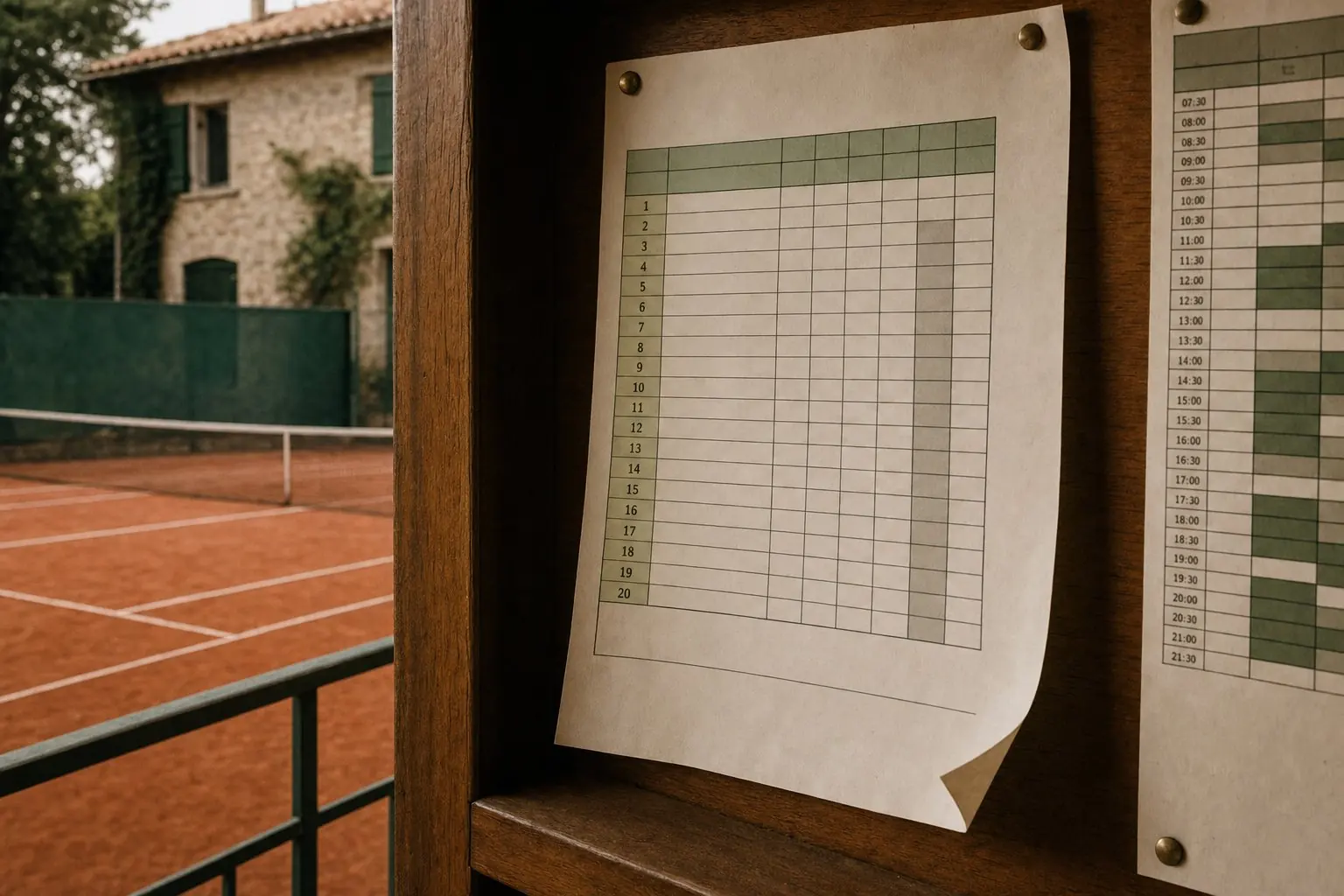
Check the format fits the club
Tennis Australia's current guidance describes leagues as a club-connected competition format and encourages players to understand the local entry process. An internal challenge ladder can sit alongside that structure, but its rules are club rules. They are not universal federation requirements. Tennis Australia: playing in a league
Use a ladder when players want opponent choice and can self-schedule. Use a team league when the club needs regular sides and fixtures. Use a tournament for a defined date and draw.
Seed bands, not false precision
Collect recent match experience, club grade, and any current rating. Create bands wide enough to recruit but narrow enough to avoid one-sided first matches. Early movement is expected. Let results correct an initial order rather than treating an organizer's seed as a verdict.
Set the operating rules
Reserve court time
Decide whether matches use normal member bookings, a protected weekly window, or off-site courts. State who can book, whether guests are allowed, and what happens when rain or a late finish stops play. This will determine whether the ladder becomes a played-match system or a static spreadsheet.
Operate the first month
Launch with clear instructions. Follow up on unanswered challenges in week two. Review level bands in week three. Publish results and handle the first dispute by the written rule in week four. Use the ladder simulator, then start a ladder when the group is ready.
Sources and last verified
Last verified: September 11, 2026. Tennis Australia, Playing in a league, accessed September 11, 2026.